
Contents Catalog
In industries such as mining, building materials, and chemicals, choosing the right grinding equipment is crucial for improving production efficiency and reducing energy consumption. Ball mills and Raymond mills, as two mainstream industrial grinding equipment, are often compared. Although both can process materials into fine powders, their performance and application scenarios differ significantly.
This article will provide an in-depth analysis of the core differences between the two, helping you make the most informed choice in your project planning.
I. Working Principle Ball Mill vs Raymond Mill
- Ball Mill: The Art of Gravity and Impact
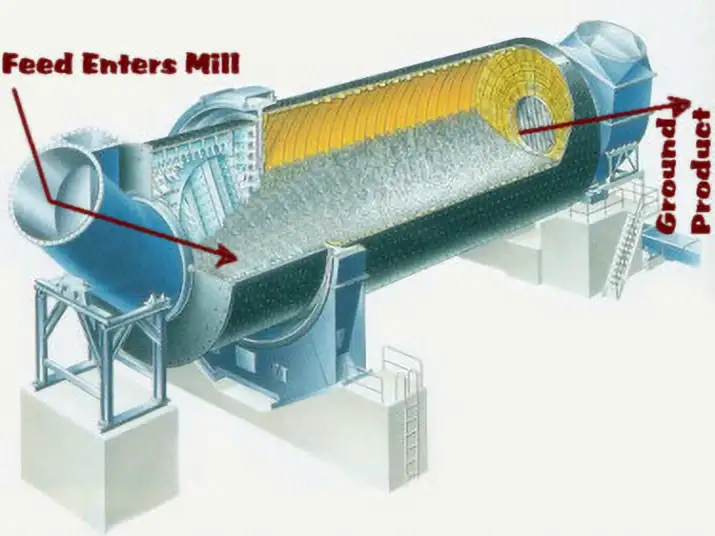
The core of a ball mill is a horizontally rotating cylinder. Material enters from the feed end, and the steel balls (grinding media) inside the cylinder rise to a certain height as the cylinder rotates, then fall freely under gravity.
Physical Process: The material is crushed by the impact force generated by the falling steel balls and the grinding force of the rolling steel balls.
Applicable Scenarios: Suitable for processing materials to an extremely fine state.
- Raymond Mill: A Combination of Pressure and Airflow
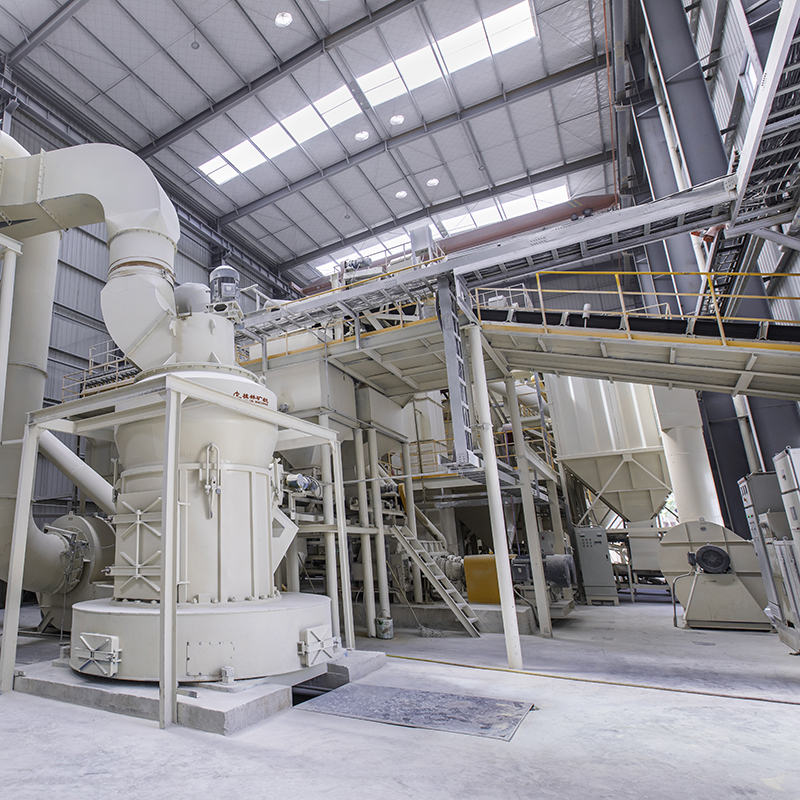
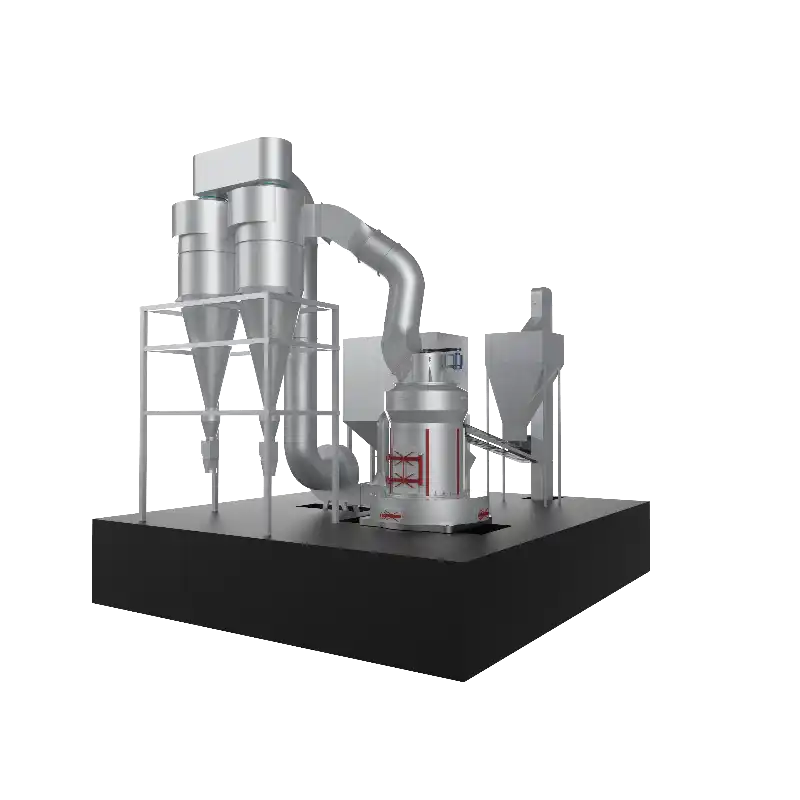
Physical Process: Under centrifugal force, the grinding rollers are pressed tightly against the grinding ring. Material is fed between the rollers and the grinding ring by a shovel, where it is crushed through compression and grinding.
Classification System: The ground powder is carried by airflow from a blower to a classifier at the top. Qualified fine powder enters a cyclone collector, while unqualified powder is returned for regrinding.
II. Structural Component Comparison of Ball Mill vs Raymond Mill
| Features | Ball Mill | Raymond Mill |
|---|---|---|
| Main Components | Cylinder, steel balls, liners, transmission device | Main unit, grinding rollers/rings, blower, classifier, piping |
| Larger Footprint | Larger, usually requires heavy foundation construction | Vertical structure, smaller footprint, high space utilization |
| Installation Difficulty | Complex structure, long installation period | High degree of integration, relatively simple installation |
III. Applicable Materials
Ball Mill: The Hardcore Performer
Due to the use of steel balls, ball mills are almost “unbiased.” They are ideal for processing high-hardness, highly abrasive materials, such as gold ore, copper ore, cement clinker, and various chemical raw materials.
Raymond Mill: Non-metallic Mineral Expert
More suitable for non-metallic minerals with a Mohs hardness below 7 and a moisture content below 6%, such as limestone, calcite, gypsum, talc, and barite.
IV. Output, Particle Size, and Energy Consumption
- Output and Particle Size
Ball Mill: Extremely high production capacity, supporting large-scale continuous operation. It produces a very wide range of particle sizes; with the addition of a classifier, it can produce ultrafine powder.
Raymond Mill: Moderate output; fineness is typically adjustable between 80-400 mesh. Higher fineness can be achieved with improved Raymond mills, but in the ultrafine powder field, its efficiency is slightly lower than that of large ball mills.
- Environmental Protection and Energy Consumption
Raymond Mill: Employs a circulating airflow system, resulting in less dust overflow. Its unit energy consumption is typically 20%-30% lower than that of a ball mill, making it a typical energy-saving and environmentally friendly piece of equipment.
Ball Mill: Consumes more power and operates with extremely high noise levels, usually requiring a dedicated sound insulation and dust removal system.
V. Purchase Recommendations: Which Should I Choose?
When customers consult with Cronus, we usually recommend choosing based on the following criteria:
| Consideration | Ball Mill | Raymond Mill |
|---|---|---|
| Production capacity | For ultra-large-scale production lines exceeding 1,000 tons per day, a ball mill is the first choice. | — (moderate to fine output, not primary for >1000 tpd) |
| Material hardness | For materials with a Mohs hardness exceeding 7, such as iron ore and quartz, a ball mill is recommended. | Generally suitable for softer materials (below Mohs 7). Not suggested for hard ore like quartz/iron ore. |
| Investment & site | Higher capital investment, needs heavy foundation and larger space. Not ideal for very tight budgets. | For non-metallic powder processing with limited budgets, small factory space, and a need for rapid production, a Raymond mill is the first choice. |
| Fineness requirements | Choose a ball mill with a classification system for ultrafine powders or special materials. | Choose a Raymond mill for general industrial-grade fine powders. |
Ball mill: ultra‑large (>1000 tpd), Mohs>7 (iron ore/quartz), ultrafine with classifier Raymond mill: limited budget, small site, rapid production, industrial fine powder
Frequently Asked Questions (FAQ)