
Contents Catalog
In non-metallic ore processing, building materials production, or power plant desulfurization, selecting the right grinding equipment is crucial to the profitability of your production line. While both vertical roller mills and Raymond mills are used for pulverizing ores, they differ fundamentally in their working principles, production capacity, and return on investment.
I. What is a Vertical Roller Mill?
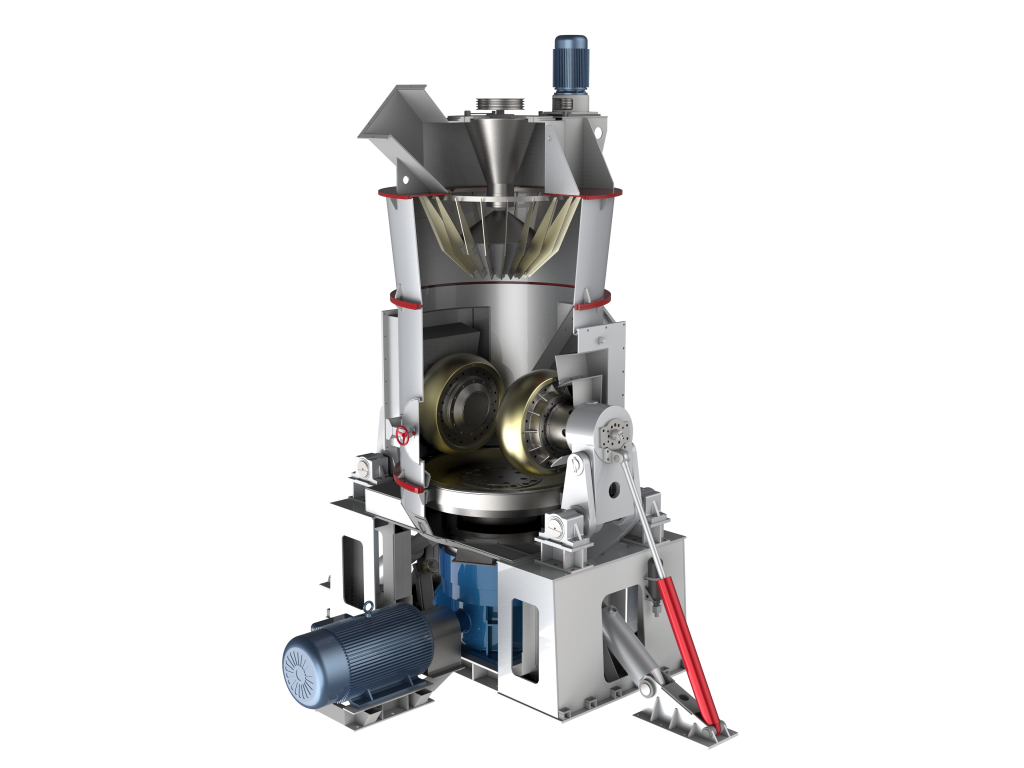
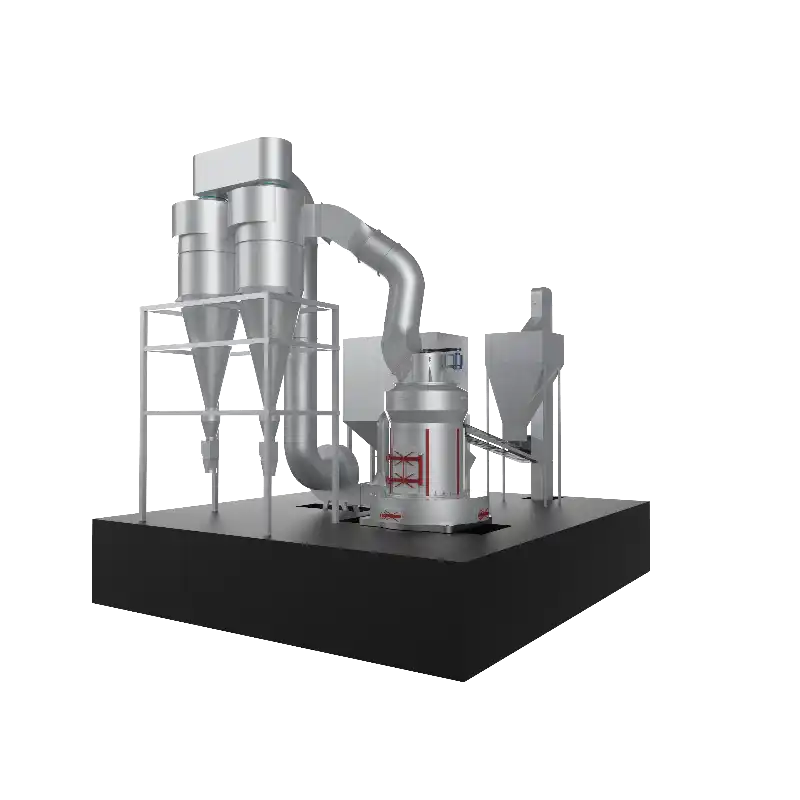
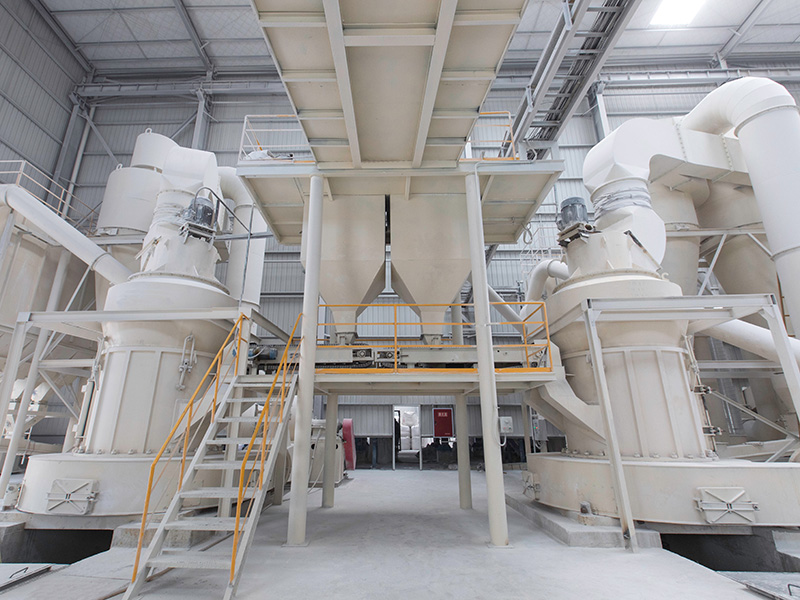
A vertical roller mill (or simply vertical mill) is a modern industrial tool for large-scale, high-efficiency grinding. It employs an advanced bed-grinding principle, integrating crushing, drying, grinding, grading, and conveying.
Vertical Roller Mill Working Principle:
Material falls from the center of the grinding disc and moves towards the edge under centrifugal force. On the grinding disc, the material forms a bed and is crushed by the powerful grinding rollers pressurized by a hydraulic device. Simultaneously, hot air enters the mill through an air ring, carrying the ground material to the top classifier for screening.
II. What is a Raymond Mill?
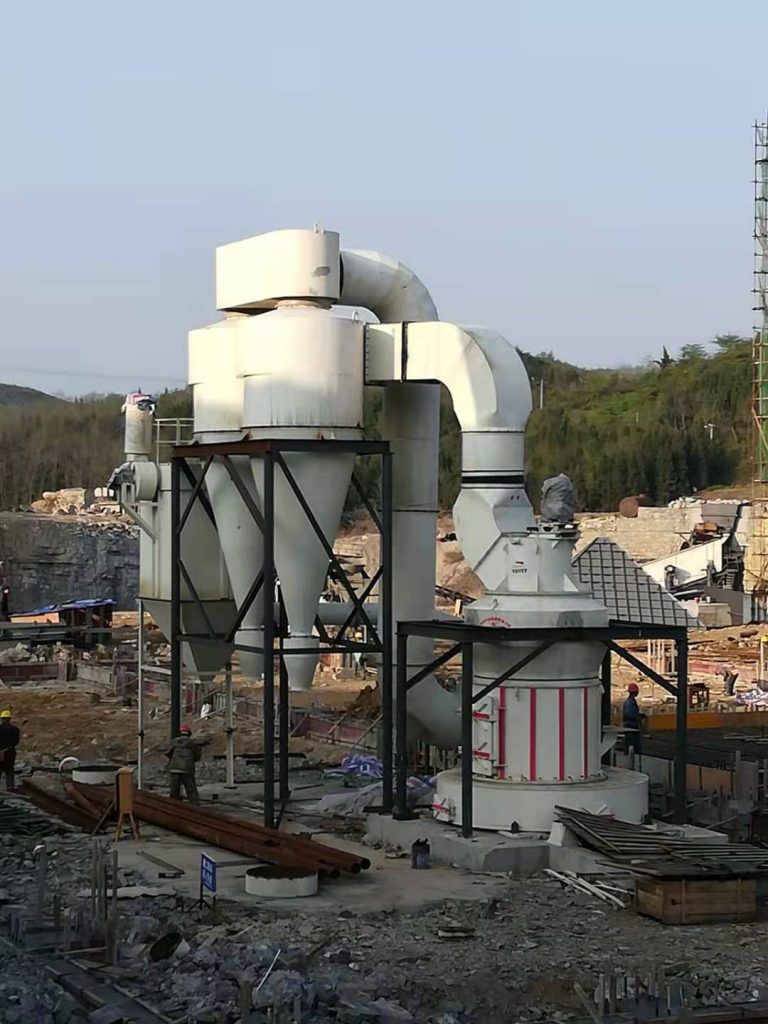
The Raymond mill is a vertical, high-efficiency grinding equipment, mainly used for processing fine and ultrafine powders of non-metallic minerals. Its working principle is based on the extrusion and grinding action between the grinding rollers and the grinding ring, grinding the material into fine powder. The Raymond mill has advantages such as simple structure, convenient operation, small footprint, low noise, and low dust, and is widely used for grinding materials such as limestone, calcite, talc, barite, and fluorite.
Working Principle:
The grinding rollers are suspended from the main unit by a bracket. When the main shaft rotates, the grinding rollers swing outward under centrifugal force, tightly pressing against the fixed grinding ring. The material is fed between the grinding rollers and the grinding ring by a shovel, and is pulverized under centrifugal extrusion pressure.
III. Core In-Depth Comparison: Vertical Mill vs. Raymond Mill
To help you understand the differences between the two more intuitively, we will break it down from the following core dimensions:
- Processing Fineness and Finished Product Quality
Vertical Mill: Extremely wide range. The standard finished product has a fineness between 80 and 400 mesh, but when paired with a high-performance, high-precision classifier, the fineness can reach 800-1250 mesh. It boasts high powder classification efficiency and a more reasonable particle size distribution in the finished product.
Raymond Mill: Focuses on medium to fine powders (30-400 mesh). While it can be adjusted to higher fineness, once exceeding 325 mesh, output drops drastically, and energy consumption surges.
2. Investment Costs and Maintenance
- Vertical Mill: A capital-intensive piece of equipment. Initial investment is higher, but due to its compact design, it occupies only about 50% of the space of a ball mill. It has a very high degree of automation, making it suitable for large factories seeking long-term comprehensive benefits.
- Raymond Mill: Low initial investment threshold, quick return on investment. Simple mechanical structure, low technical requirements for operators, and relatively easy daily maintenance.
IV. How Should You Choose?
| Recommended Equipment | Applicable Scenarios | Key Features |
|---|---|---|
| Vertical Mill | Large-Scale Industrial Projects | Suitable for mass production, such as cement raw material, slag powder, and coal powder production lines with an annual output of over 100,000 tons. |
| High-Moisture Materials | Possesses efficient drying capability, allowing for simultaneous grinding and drying. | |
| Space Constraints | Highly integrated equipment, suitable for sites with strict floor space requirements. | |
| Raymond Mill | Small to Medium-Scale Processing | Suitable for small-scale production for local markets, such as processing gypsum powder or limestone powder. |
| Limited Budget | Relatively low equipment cost, ideal for start-ups or as a pre-grinding stage in larger production lines. | |
| Conventional Dry Materials | Applicable for dry ores with a Mohs hardness below 7 and low moisture content. |
summary
vertical mills represent the future of advanced milling technology, possessing unparalleled advantages in energy saving, increased production, and intelligent operation; while Raymond mills, with their mature, economical, and easy-to-maintain characteristics, remain the ideal choice for small and medium-sized investors.