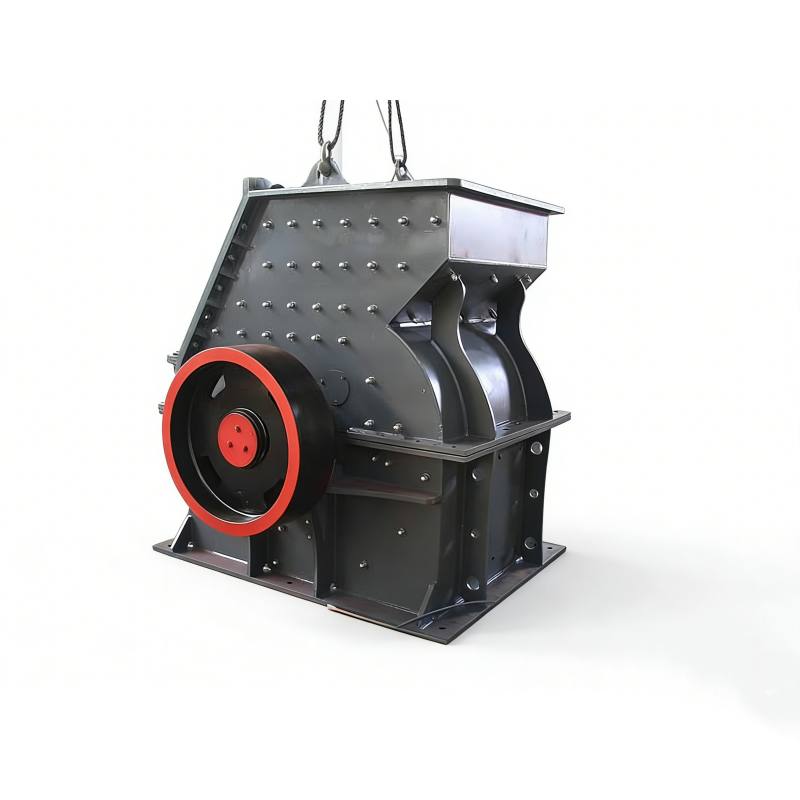

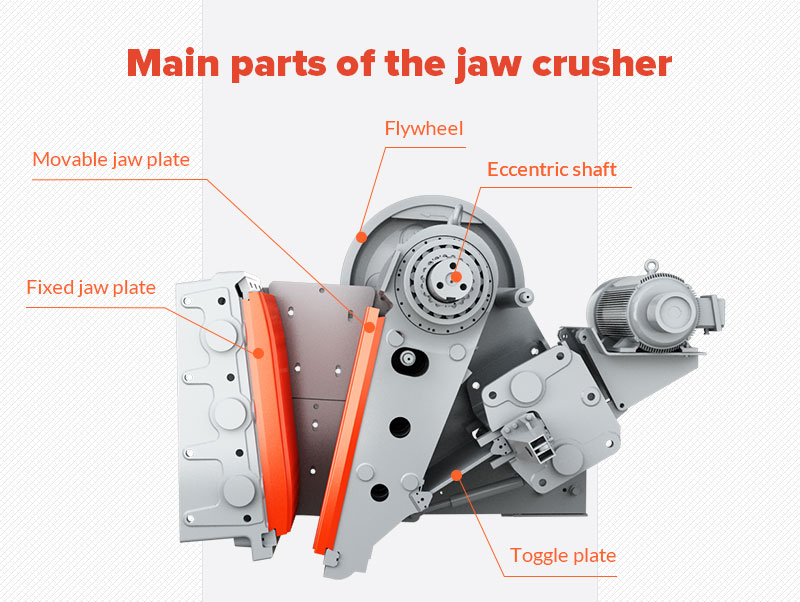
A jaw crusher primarily consists of several critical components: the eccentric shaft, pulley, frame, flywheel, return spring, toggle plate, fixed jaw plate, and movable jaw plate. Given the harsh operating environment of jaw crushers, various malfunctions frequently occur during operation. Therefore, to ensure stable equipment operation and enhance performance, diligent daily maintenance is essential.
Key Points for Repairing the Movable Jaw Shaft
During the repair of the movable jaw shaft journal, particular attention should be paid to the following points: Provided that mechanical strength remains within permissible limits, worn journals can be restored by turning them down and then fitting a sleeve over them; the primary objective is to restore the original fit dimensions.
It is also important to employ specific technical measures—such as electric arc welding—to build up worn journals, followed by turning to restore the original fit dimensions. The use of vibration welding and metal spraying techniques also constitutes a vital method for such repairs.
Key Points for Repairing the Eccentric Shaft
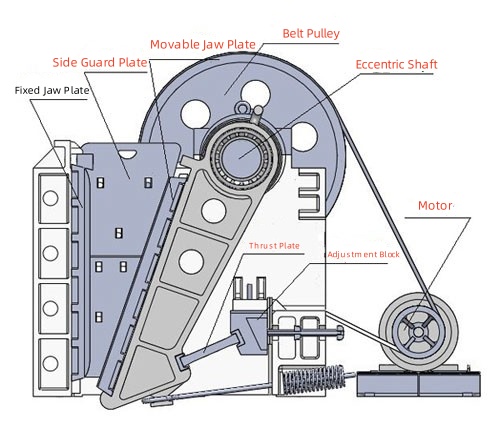
When repairing the eccentric shaft of a jaw crusher, the following points should be observed: The repair method selected must be appropriate for the actual degree of wear on the component—typically involving turning or scraping. If, after the repair process is complete, the journal diameter is slightly smaller than the original fit dimension, a new plain bearing (bushing) should be fabricated.
In special circumstances, the original fit dimensions can be restored by turning down the journal and fitting a sleeve over it. Utilizing vibration welding and metal inlay techniques also serves as an important method for these repairs.
Key Points for Repairing Plain Bearings in the Eccentric Shaft
In mechanical equipment, the necessity of bearing repair is largely determined by changes in clearance and deviations from geometric tolerances. If the bearing wear is not severe, adjustments can be made by removing shims; optimizing the top clearance in this manner can effectively extend the equipment’s operational lifespan.
However, if the wear is severe, immediate repair is mandatory. Repair methods for plain bearings typically range from simple localized repairs—addressing specific defects—to turning operations. Such machining is generally considered reliable. For areas exhibiting severe damage, a complete re-babbitting (re-casting) or layered gas welding process may be required.
Key Points for Repairing the Pull Rod
During operation, the pull rod may develop cracks or fractures, or experience misalignment of its bearing bore, as well as wear or uneven abrasion of its support pads. Should a pull rod failure occur that renders the machine inoperable, appropriate repair measures must be implemented to restore the component to its normal working condition. Repairs to the connecting rod are generally carried out using one of two methods: direct welding or welding with reinforcing steel plates; the choice of method should be determined based on the actual circumstances.
Maintenance management plays a crucial role in the overall operation of a jaw crusher. By diligently performing routine maintenance and addressing specific issues as they arise, it is possible to ensure the equipment operates at its optimal performance level.