
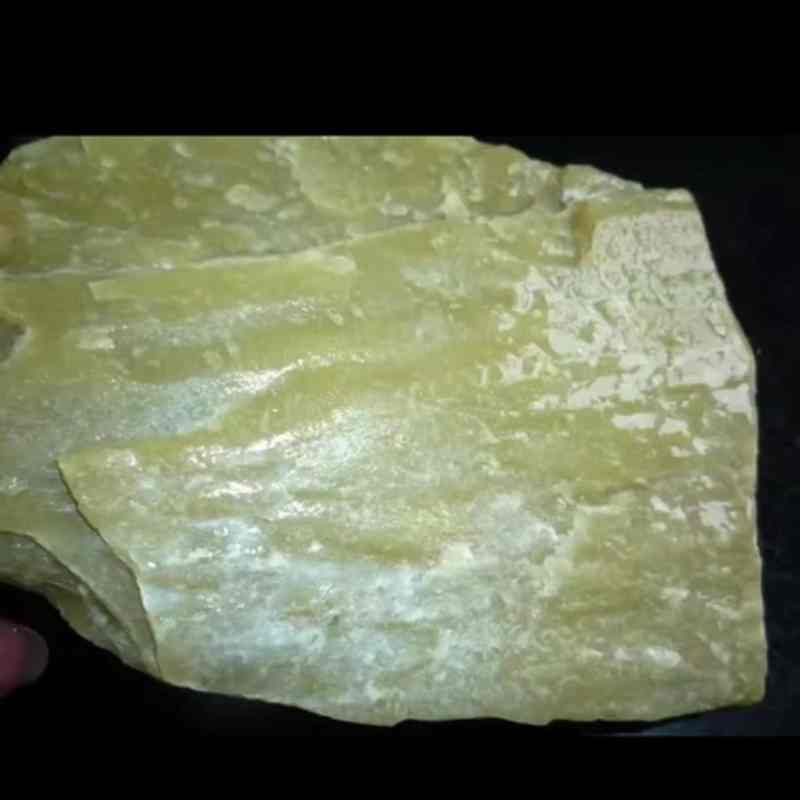
Pyrophyllite is a natural layered silicate mineral valued across modern industrial sectors for its unique combination of physical and chemical properties. High fire resistance, stable chemical inertness, moderate hardness, and excellent plasticity make processed pyrophyllite powder a staple raw material in ceramics, refractory materials, chemical production, papermaking, and coating manufacturing. To turn raw pyrophyllite ore into fine powder with the precise fineness required for diverse industrial needs, Raymond mills have long stood out as the most cost-effective, reliable, and mature processing equipment in the non-metallic mineral grinding industry.
Uses of Pyrophyllite Powder
Pyrophyllite powder is an essential raw material for ceramic bodies and glazes. It effectively lowers the firing temperature of ceramic products, shortens production firing cycles, and significantly improves the whiteness and mechanical strength of finished ceramic pieces. It is extensively applied in the mass production of daily-use ceramics, sanitary ware, and architectural ceramics, helping manufacturers reduce energy consumption while enhancing product quality.
In refractory material production, pyrophyllite powder features outstanding high-temperature resistance and a low thermal expansion coefficient, making it a core component for refractory bricks, castables, and thermal insulation materials. When processed into fine powder via Raymond mills, it greatly boosts the thermal shock resistance and overall service life of refractory products, making it indispensable for high-temperature industrial kilns and thermal insulation projects.
In the chemical and plastics industries, ultra-fine pyrophyllite powder acts as a high-performance functional filler in rubber, plastic, and coating products. It enhances wear resistance, acid and alkali resistance, and dimensional stability, while replacing expensive synthetic fillers to cut production costs without compromising performance.
In papermaking, pyrophyllite’s delicate layered flake structure gives it excellent covering power and luster, making it a common choice as a high-quality paper filler and coating pigment that upgrades whiteness, surface smoothness, and printability for high-grade printing and writing paper.
Beyond mainstream industrial fields, pyrophyllite powder also serves agriculture and daily chemical industries as a carrier for agricultural pesticides, a filler for compound fertilizers, and a safe, eco-friendly raw material for daily chemical products such as body powder, extending its market value across multiple low-threshold industries.
Why Raymond Mills Are Ideal for Pyrophyllite Processing
Raw pyrophyllite ore has a Mohs hardness of 1 to 2 with good toughness, which makes it perfectly suited for fine grinding with Raymond mills. Compared with traditional grinding equipment like ball mills, Raymond mills offer several distinct advantages for processing medium and low-hardness non-metallic minerals such as pyrophyllite. Flexible fineness adjustment allows finished powder fineness to be stably controlled between 80 and 425 mesh (33 to 180 microns), fully meeting the differentiated fineness standards required by ceramics, refractories, coatings, and other downstream industries. Low energy consumption and stable output mean less unit power draw than ball mills while maintaining consistent continuous production, effectively lowering daily operating costs and boosting profit margins for processing plants. A fully closed grinding system paired with professional dust removal devices realizes eco-friendly operation with minimal dust pollution, fully complying with modern environmental protection production requirements. The compact and streamlined structure also saves factory space, simplifies workshop layout planning, and reduces daily maintenance difficulty and initial plant investment costs.
Standard Raymond Mill Processing Workflow for Pyrophyllite
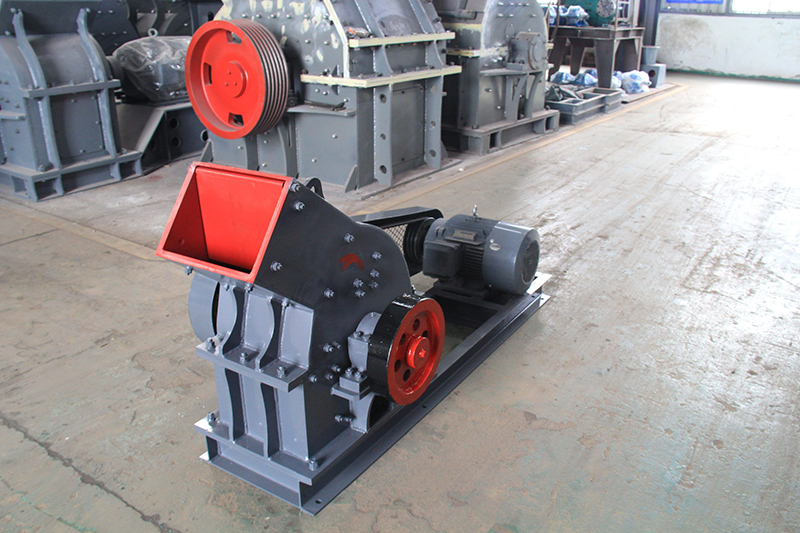
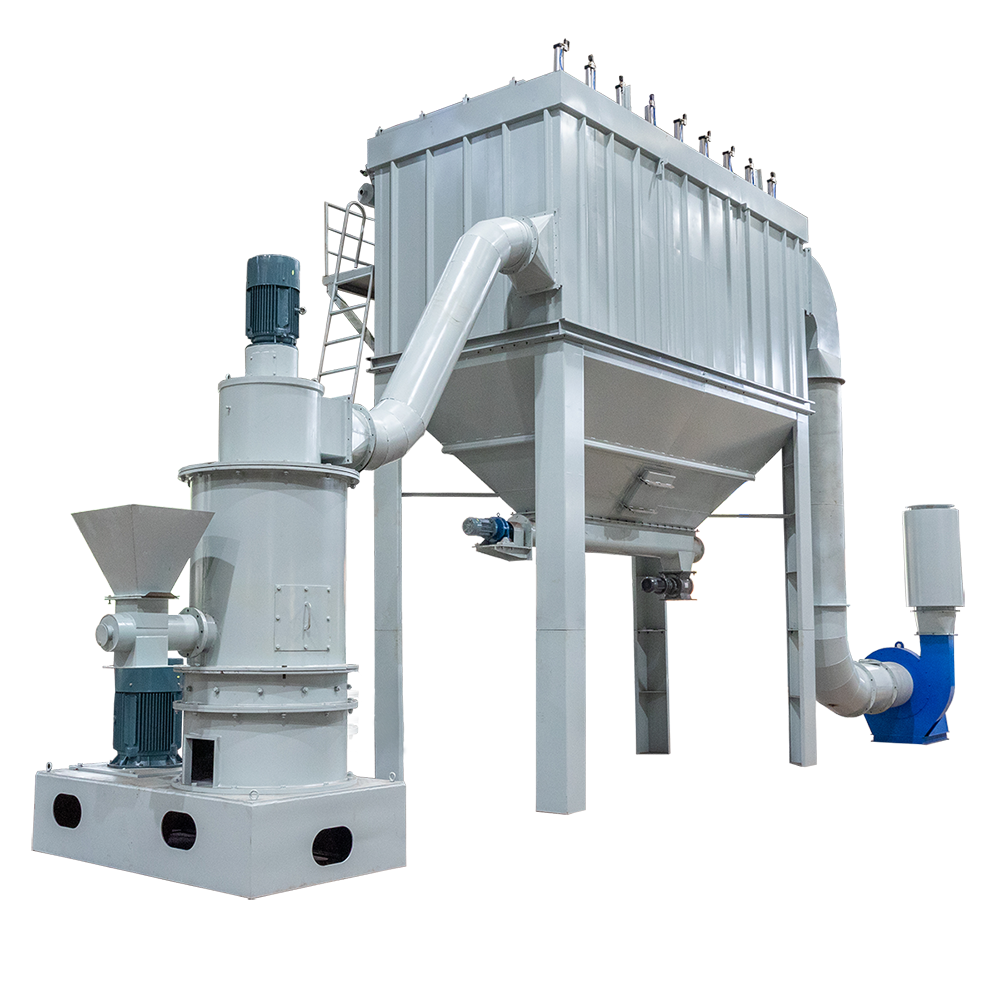
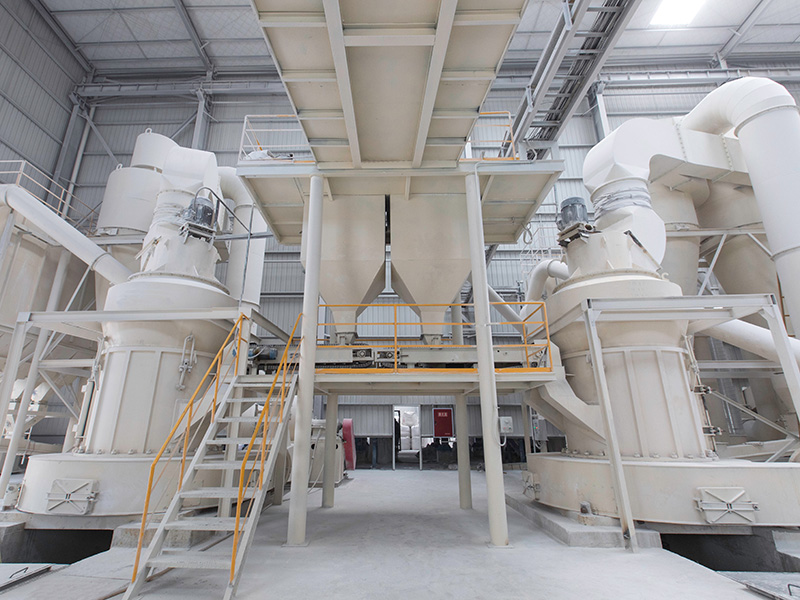
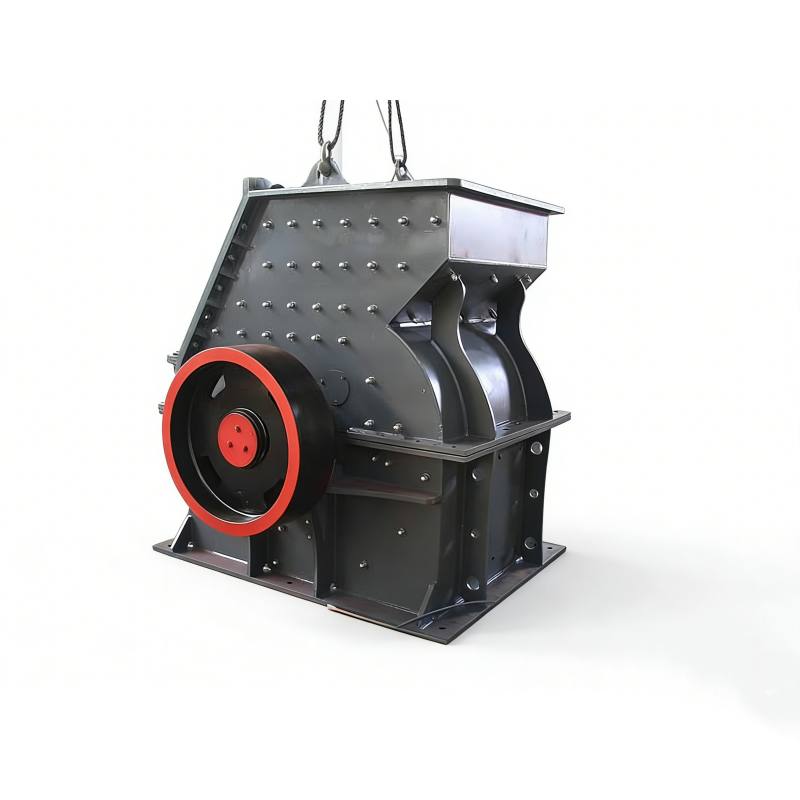
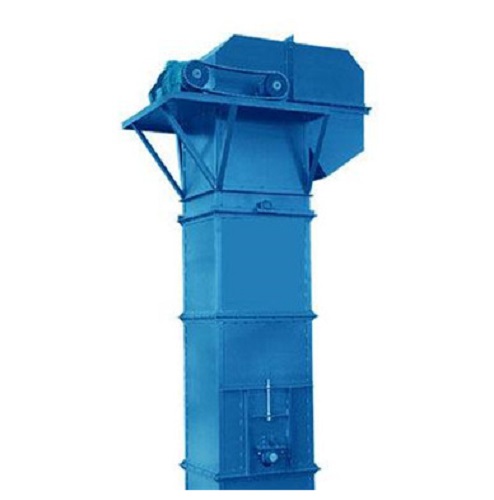
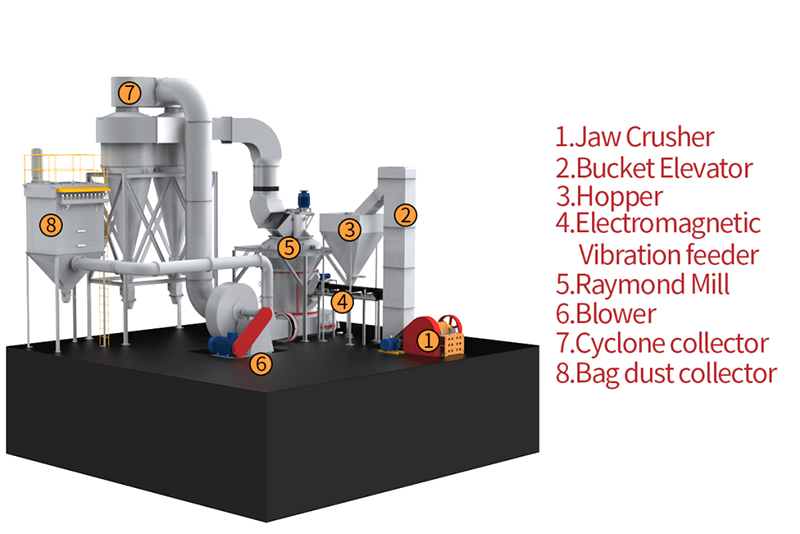
The entire pyrophyllite powder production process via Raymond milling is automated, continuous, and environmentally friendly, following mature and standardized operating steps. First, large raw pyrophyllite ore is crushed by a jaw crusher into small particles with a particle size below 30mm, reaching the feeding standard of Raymond mills. Next, a vibrating feeder delivers the crushed pyrophyllite materials into the Raymond mill grinding chamber evenly and continuously, avoiding material accumulation or empty grinding. During fine grinding, grinding rollers driven by centrifugal force press tightly against the grinding ring and roll continuously, fully squeezing and grinding the ore materials to achieve fine powder refinement. The ground powder is then carried upward by airflow into the classifier for particle classification, where qualified powder with the set fineness flows into the cyclone powder collector with the airflow, while unqualified coarse particles fall back to the grinding chamber for re-grinding. Finally, qualified pyrophyllite powder is collected by the cyclone and discharged through the discharge valve as finished product, while residual air is purified by a pulse dust removal system before discharge, ensuring zero dust pollution and compliant green production.
Professional Raymond Mill Selection Tips for Pyrophyllite Production
The quality of processing equipment directly determines powder quality, production efficiency, and project profitability. For pyrophyllite powder processing projects, selecting a targeted, optimized Raymond mill is the core of successful operation. As a professional mining machinery manufacturer with rich industry experience, Cronus specializes in the research, development, and production of high-performance Raymond mills. Its equipment, specially optimized for medium and low-hardness non-metallic minerals like pyrophyllite, delivers outstanding practical production advantages: core wearable parts such as grinding rollers and grinding rings manufactured with high-quality wear-resistant materials to extend equipment service life and reduce maintenance costs, a high-precision classification system supporting flexible and accurate fineness adjustment to meet diverse industry quality standards, and a fully closed, negative-pressure operating system matched with high-efficiency dust removal devices to help processing enterprises achieve standard-compliant green production. Beyond the equipment itself, Cronus provides a complete one-stop service covering ore property testing, personalized process design, and equipment installation and commissioning, greatly reducing project investment risks for customers.
Final Thoughts
With the continuous upgrading of downstream industries such as ceramics, refractory materials, and new building materials, market requirements for pyrophyllite powder purity, fineness, and stability are becoming increasingly strict. Investing in high-performance, stable Raymond mill equipment has become a key factor for powder processing enterprises seeking to improve product competitiveness and control production costs. When selecting equipment, manufacturers should comprehensively consider their own ore characteristics, planned production capacity, and finished product standards, and choose professional equipment suppliers with mature technology and complete after-sales services to maximize project investment benefits.