
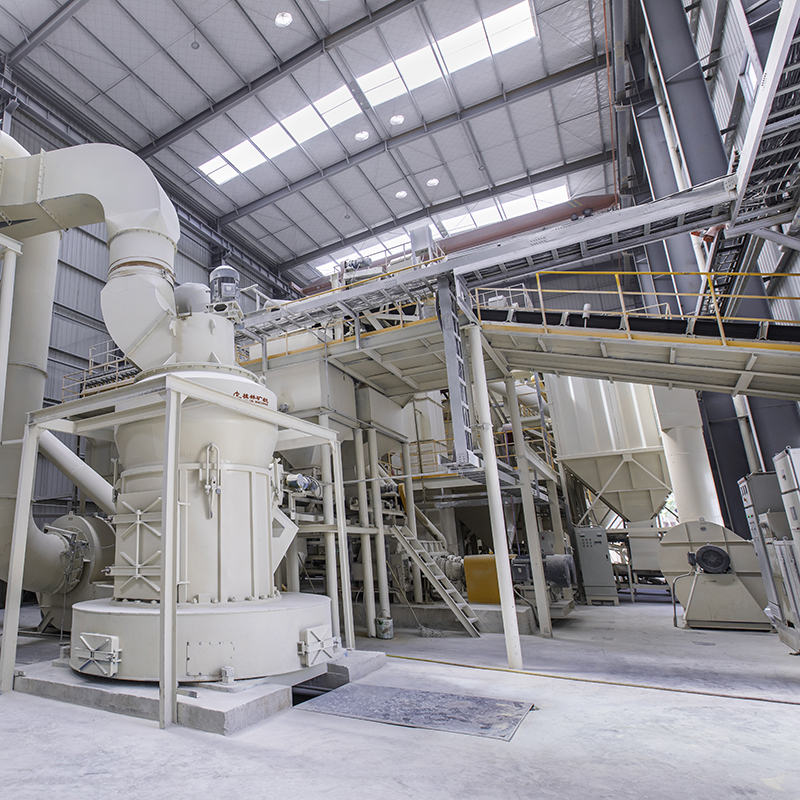
Many users often wonder when purchasing Raymond mill accessories: why do Raymond mill roller shafts and central shafts with identical appearances have a several-fold price gap on the market? Industry insiders know clearly that the real difference does not lie in external dimensions, but in whether formal quenching and tempering heat treatment is adopted.
The roller shaft and central shaft are the core transmission and load-bearing components of a Raymond mill. The quality of these two shafts directly determines the operational stability, failure rate and service life of the entire equipment. In short, heat treatment is the key to durable and reliable Raymond mill shaft parts, and it is also the core standard to distinguish high-quality accessories from inferior defective products. Combined with the actual working conditions of Raymond mills, this article elaborates on the necessity, functional principles and potential risks of skipping heat treatment for mill shafts.
Practical Technical Principles of Heat Treatment for Raymond Mill Shafts
Regular manufacturers adopt the mature process of overall quenching + high-temperature tempering for Raymond mill roller shafts and central shafts. In simple terms, the internal metallographic structure of steel is optimized through precise temperature control, enabling ordinary round steel to balance hardness, toughness and structural stability to adapt to the high-intensity operation requirements of Raymond mills.
Quenching is mainly used to improve hardness and structural strength. According to different steel materials, precise temperature control is implemented: 45# steel is heated to about 840°C, and 40Cr alloy steel to about 860°C. After being heated above the critical temperature and fully insulated, the shaft blanks are rapidly cooled by water. This process densifies the internal steel structure, greatly improving the deformation resistance and wear resistance of the shaft to cope with heavy-duty operating conditions.
High-temperature tempering aims to eliminate internal stress and enhance toughness. Quenched steel features high hardness but high brittleness, which is prone to cracking. After high-temperature tempering at 500~650°C, the internal stress and brittleness caused by quenching are completely eliminated. The treated shaft retains high hardness and strength while possessing excellent toughness, avoiding brittle fracture and deformation and adapting to long-term continuous grinding operation of Raymond mills.
Four Practical Advantages of Heat Treatment for Raymond Mill Shafts
Raymond mill roller shafts and central shafts with standard heat treatment deliver far better comprehensive performance than untreated ordinary round steel shafts, showing prominent advantages in actual production:
Higher Bending Resistance and Anti-deformation Performance: The bending strength of the shaft is increased by 30%~50% after heat treatment. It will not bend or distort under heavy-load operation and material compression, ensuring normal operation of the transmission system and avoiding equipment jamming.
Excellent Impact Resistance and Fracture Resistance: Material impact during ore feeding and instantaneous pressure during equipment start-stop will generate continuous impact force on the shaft. The optimized shaft with sufficient toughness can buffer alternating impact loads, fundamentally reducing shaft cracking and fracture failures.
Improved Wear Resistance and Longer Service Life: The bearing mounting position and oil seal fitting position are high-wear areas. Heat treatment more than doubles the wear resistance of these key positions, effectively preventing bearing raceway damage and oil seal leakage, and reducing accessory replacement frequency.
Stable Dimensional Performance and Smoother Equipment Operation: Heat treatment completely releases the residual internal stress of steel. The shaft maintains accurate concentricity during long-term operation without deformation or eccentricity, eliminating equipment vibration, excessive noise and uneven grinding problems.
Heat Treatment as a Mandatory Process Based on Actual Working Conditions
The roller shaft and central shaft of Raymond mills operate under complex and harsh stress environments, enduring continuous heavy pressure, impact, torsion and alternating fatigue loads. Ordinary untreated round steel cannot support long-term high-intensity operation, making heat treatment an essential process for stable equipment operation.
Roller Shaft: Core Moving Component with Impact and Fatigue Resistance
The roller shaft rotates at high speed with the plum frame, driving the grinding roller to crush and grind materials such as ore, limestone and talc. During operation, it bears direct material impact, centrifugal swing force generated by high-speed rotation and high-frequency alternating loads. In long-term reciprocating operation, shafts without heat treatment are prone to wear, deformation and fracture. Only heat-treated shafts can adapt to such complex working conditions and ensure stable continuous operation.
Central Shaft: Core Load-bearing and Transmission Spindle
As the core hub of the entire Raymond mill, the central shaft bears the full weight of the plum frame and all roller components, and transmits motor torque to drive the entire grinding system. It is not simply under static load, but subject to continuous torsion, radial bending moment and fatigue loads with stricter working conditions than ordinary components.
Slight wear or bending deformation of the central shaft will trigger a chain of problems, including overall mechanical eccentricity, severe equipment vibration, uneven roller wear and unstable discharge particle size, and even lead to equipment shutdown failures. Therefore, the central shaft must obtain high strength, fatigue resistance and dimensional stability through standard heat treatment to ensure precise and stable operation of the whole machine.
Hidden Dangers of Skipping Heat Treatment: Seemingly Cost-effective, Actually Loss-making
Many low-cost shaft parts on the market are simply processed from ordinary round steel by manufacturers to cut production costs and shorten manufacturing cycles, with the entire heat treatment process omitted. Although they have the same appearance and size as qualified products, their internal material performance fails to meet standards, bringing potential risks and continuous economic losses to production.
Untreated Raymond mill shafts feature loose steel structure and large residual internal stress, resulting in prominent application problems: insufficient strength leads to bending deformation and transmission stalling under heavy load; poor wear resistance causes rapid abrasion of bearing and oil seal positions, frequent oil leakage and bearing damage; unstable dimensional performance leads to continuous concentricity deviation, causing excessive equipment vibration and reduced grinding accuracy. Ultimately, the equipment suffers from frequent shutdowns for maintenance and frequent accessory replacement, seriously affecting production efficiency and bringing much higher long-term operation and maintenance costs than the price difference of qualified accessories.
Standard Manufacturing Process of Formal Raymond Mill Shafts
Reliable Raymond mill accessory manufacturers always adhere to the production principle of no process omission, no inferior materials and no simplified treatment. High-quality wear-resistant materials such as alloy steel and high-manganese steel are adopted, and all products are processed and inspected in strict accordance with standardized procedures. The complete production process is as follows:
Blanking: High-quality round steel is selected and cut strictly according to drawing dimensions, with reserved machining allowance and heat treatment deformation allowance to avoid subsequent processing errors.
Rough Turning: Excess base material of the blank is removed through rough turning to finish the basic shape and produce semi-finished shaft products.
Core Heat Treatment: Rough-machined shaft blanks are processed by overall quenching and high-temperature tempering to optimize the internal steel structure and form high strength and high toughness mechanical properties.
Semi-finish Turning: Surface oxide scales generated during heat treatment are removed, and micro-deformation caused by heat treatment is corrected to restore basic assembly accuracy.
Precision Grinding: Key matching positions including bearing seats and oil seal positions are finely polished to strictly control surface roughness and assembly dimensional accuracy for perfect fitting.
Final Inspection and Warehousing: Core parameters such as shaft hardness, concentricity and roundness are inspected item by item. Qualified products are treated with rust prevention and stored in classification.
Special quality inspectors supervise the entire production process. Before delivery, all shafts undergo hardness sampling inspection and three-coordinate concentricity testing to ensure that every roller shaft and central shaft meets industrial standards and eliminate defective products.
Conclusion
For the roller shaft and central shaft of Raymond mills, heat treatment is not an optional auxiliary process, but the core process that determines accessory quality and equipment operating status. Standard quenching and high-temperature tempering treatment fundamentally solve the common problems of ordinary shafts such as easy deformation, fracture, poor wear resistance and unstable performance, perfectly adapting to the complex grinding working conditions of Raymond mills. Although heat-treated accessories have a slightly higher procurement cost, they can effectively reduce equipment failure rates, extend accessory service life and cut shutdown maintenance losses, making them a more cost-effective and reliable choice for industrial production.