
What is a Raymond Mill?
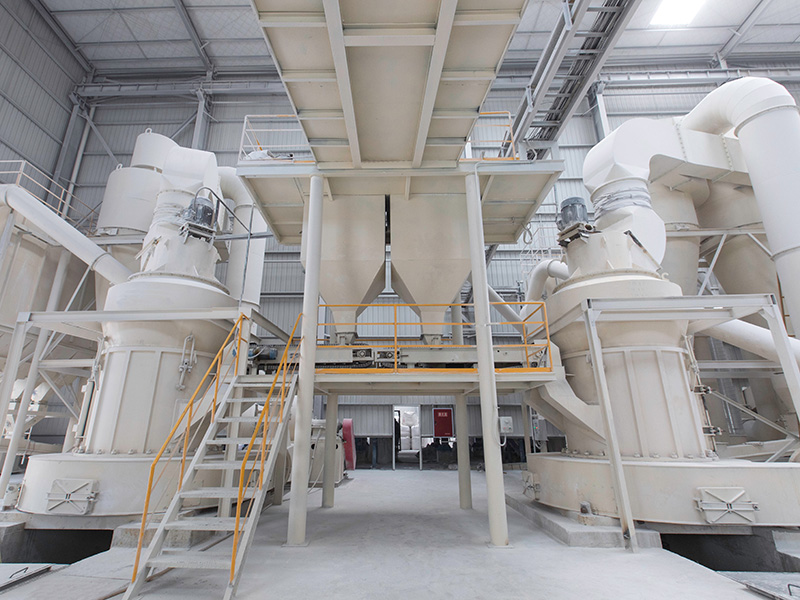
The Raymond mill (also known as a Raymond roller mill or Raymond grinder) is a highly efficient piece of industrial grinding equipment designed specifically for pulverizing ores, minerals, and non-metallic materials into fine or ultra-fine powders. Since its inception in the early 20th century, the Raymond mill has become one of the most widely utilized grinding solutions across dozens of industries, including mining, construction, chemicals, and metallurgy.
Whether processing barite, calcite, limestone, kaolin, or over 280 other types of materials, the Raymond mill consistently produces high-quality powder products with a level of stability that other grinding equipment struggles to match at a comparable cost.
How the Raymond Mill Works
A thorough understanding of the Raymond mill’s operating principles is essential for selecting the appropriate model and achieving optimal operational efficiency.
Core Operating Principles
The Raymond mill employs a centrifugal roller-ring grinding mechanism:
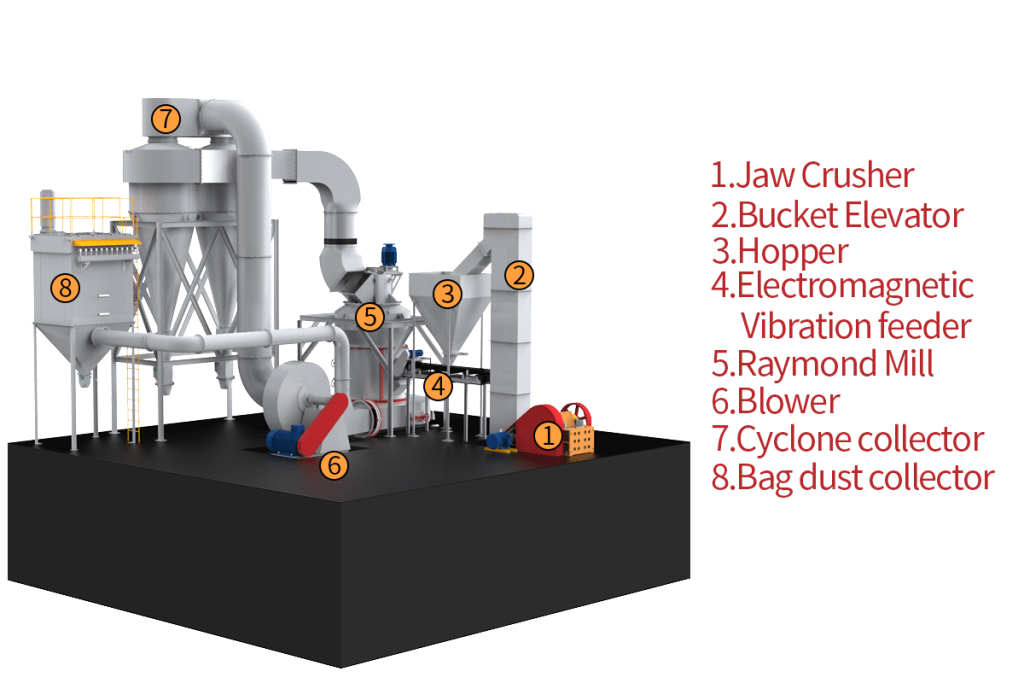
Main Components & Functions of Raymond Mill System
| Component | Function |
|---|---|
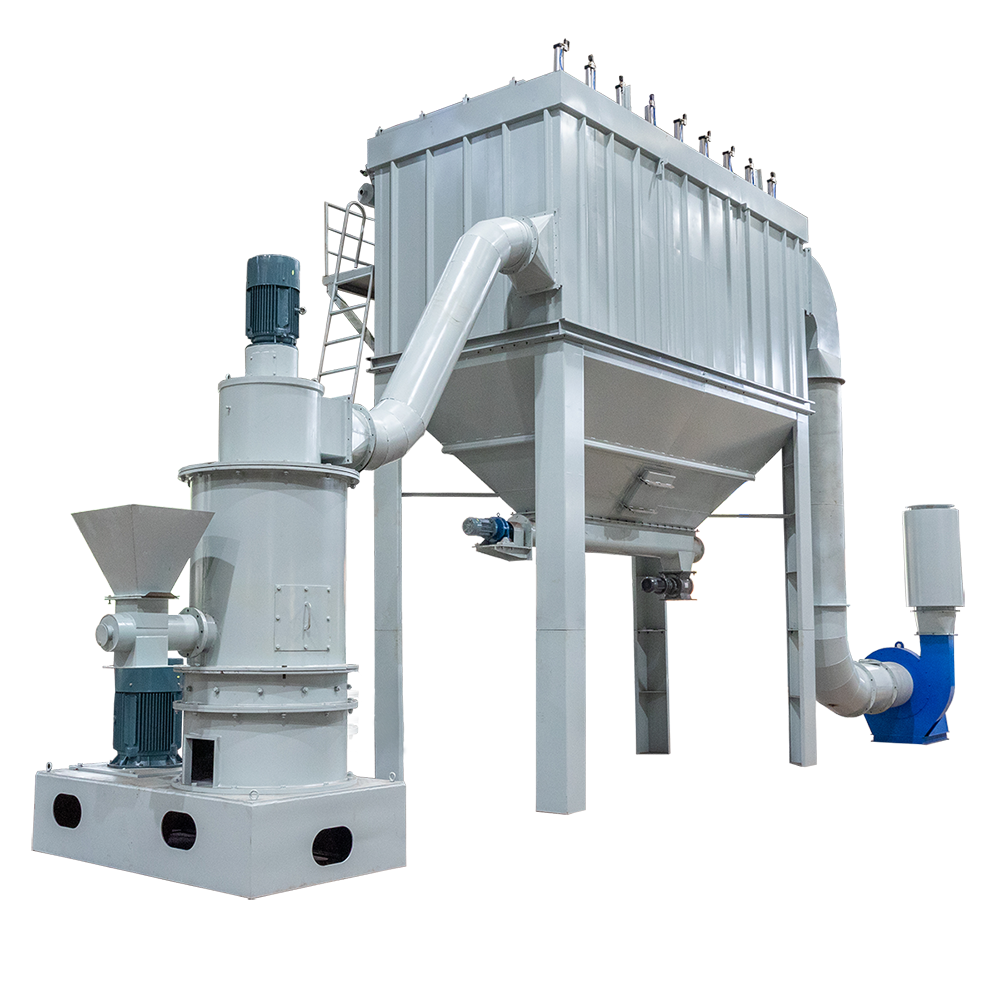
| Main Grinding Assembly | Houses the grinding rollers, grinding ring, and the central rotating spindle. |
| Analyzer / Classifier | Controls the output fineness of the powder (80–600 mesh). |
| Blower / Fan | Generates the airflow required for material conveying and classification. |
| Cyclone Separator | Collects the finished powder product. |
| Vibrating Feeder | Regulates the material feed rate into the grinding chamber. |
| Dust Collector | Captures fine dust particles to meet environmental protection requirements. |
| Electrical Control Cabinet | Monitors and controls the operation of the entire system. |
This closed-circuit, air-swept design endows the Raymond mill with several key advantages: high grinding efficiency, low energy consumption per unit of output, and the ability to continuously adjust product fineness without the need for system shutdown.
Raymond Mill: Key Application Materials
| Industry Sector | Specific Materials |
|---|---|
| Mining & Minerals | Calcite, Barite, Fluorite, Dolomite, Marble, Kaolin, Bentonite, Talc, Mica, Apatite, Pyrite, Iron Oxide |
| Building Materials | Limestone, Cement Clinker, Gypsum, Slag, Fly Ash, Coal |
| Chemical Industry | Calcium Hydroxide, Activated Carbon, Activated Bleaching Earth, Potash Feldspar, Glass Powder |
| Metallurgical Industry | Iron Ore, Manganese Ore, Bauxite |
| Other Industries | Cosmetic Raw Materials, Pharmaceutical Powders, Food-Grade Calcium Carbonate |
Frequently Asked Questions
Q: What is the difference between a Raymond mill and a ball mill?
A: The Raymond mill employs a roller-and-ring grinding mechanism, resulting in lower energy consumption for the production of fine powders (ranging from 80 to 600 mesh). A ball mill, conversely, utilizes steel balls for grinding and is better suited for large-scale coarse grinding operations. For most fine grinding applications, the Raymond mill offers lower operating costs.
Q: Can a Raymond mill process wet or sticky materials?
A: Standard Raymond mills require the feed material to have a moisture content of less than 6%. Wet or sticky materials must be pre-dried before processing. High-moisture feed can clog the grinding chamber and classifier, thereby reducing efficiency and potentially damaging components.
Q: How long do the rollers and grinding rings in a Raymond mill last?
A: The service life primarily depends on the hardness and abrasiveness of the material being processed. When processing soft materials such as limestone, the rollers and rings can last for 1,000 to 1,500 operating hours; however, when processing harder materials, replacement may be required every 500 to 800 hours. Utilizing wear-resistant components made of high-chromium alloy or tungsten carbide can significantly extend the replacement cycle.
Q: What is the finest particle size a Raymond mill can achieve?
A: A standard Raymond mill can produce products ranging from 80 to 325 mesh; high-pressure models can reach 400 to 600 mesh; and ultra-fine Raymond mills can achieve particle sizes between 325 and 3,000 mesh, meeting the requirements of advanced industrial applications.
Q: Is a Raymond mill suitable for grinding coal?
A: Yes, it is suitable, but special safety precautions must be observed. Coal grinding operations require the installation of explosion-proof electrical components, inert gas protection systems, and strictly controlled airflow to prevent dust explosions. When placing an order, it is essential to explicitly specify that the mill is intended for coal grinding applications.